Feature story

Citizen sleuthing: The unmasking of Lonelygirl15

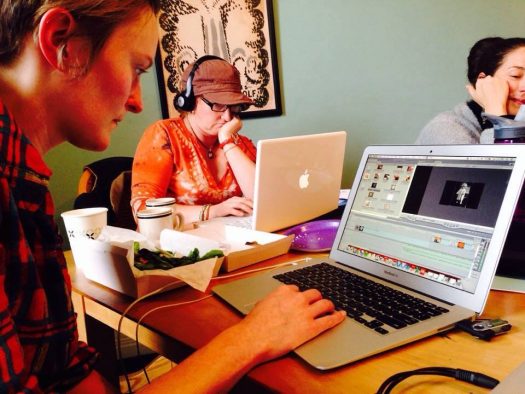
19-year-old offers tips on research methods used to uncover her true identity Matt Foremski, pictured below, tells how he did some citizen sleuthing to discover the true identity of YouTube’s Lonelygirl15. She was not a home-schooled 16-year-old girl named Bree but rather an actress named Jessica Rose, who had recently moved from New Zealand to Burbank, Calif. I caught up with Foremski in an AIM chat to learn the details of how he broke one of the biggest Internet stories of 2006.


Read More

The Prince of Darknet

Why is a trafficker in pirated movies sailing to Hollywood’s rescue? The following feature, excerpted in part from J.D. Lasica’s book “Darknet,” appeared in the May-June 2005 issue of Legal Affairs magazine. TWO WEEKS BEFORE THE HULK OPENED AT MOVIE THEATERS in June 2003, the $150 million motion picture made an unauthorized debut in cyberspace. Universal Pictures had sent a videotape of the unfinished film to a New York advertising agency, where an employee lent the tape to a friend, a 24-year-old insurance underwriter, who digitized the tape and put it on an Internet movie-trading channel. The work print lacked special effects and much of the movie’s soundtrack. After it was viewed online, negative word of mouth spread quickly, helping

Read More

Summary of 2005 Citizens Media Summit

Given the rise of citizens’ media and the burgeoning grassroots publishing movement, author-technologist J.D. Lasica — with the encouragement of Internet Archive founder Brewster Kahle — convened a Citizens Media Summit at the Internet Archive headquarters in San Francisco on May 14, 2005. The goal was to begin a conversation, make connections and set down a rough roadmap for how to nurture grassroots media in the years ahead. Thirty-six people turned out for the strategy session on May 14, 2005, beginning at the Rob Hill campground in the Presidio before we retreated to the warmth of the Archive’s offices. Attendees of the Summit We were surprised by the robust turnout. People came not just from the Bay Area but from

Read More
killing fields of culture

How copyright law has become the killing fields of culture

For years, all was peaceful in the house of Horovitz. Jed Horovitz, a 53-year-old New Jersey entrepreneur with sharply chiseled features and gleaming bald head, had been running a small video operation called Video Pipeline that took Hollywood films, created two-minute trailers to help promote them, and distributed them to online retailers such as Netflix, BestBuy, and Barnes and Noble, as well as public libraries. Then one day in 2000, the Walt Disney Co. sent a cease-and-desist order, charging that Horovitz’s company was violating Disney’s copyright by featuring portions of their movies online. Horovitz was astonished that his seven-employee company — which, after all, had always showcased Disney films in a favorable light — was being bullied by a $90

Read More

How the Rutgers Targum achieved independence

Birth of an alumni association — and an independent Targum Note: J.D. Lasica gave the keynote address at the Targum 25 Gala Dinner in New Brunswick, NJ, on April 1, 2005, celebrating 25 years of Targum independence. By J.D. Lasica In many ways, the story of the Targum Alumni Association’s birth is tied inextricably to the paper’s drive for independence. And both came about largely as a result of a seminal journalism convention and alumni reunion held on the Rutgers campus 25 years ago today. I was chairman of that maddeningly difficult gathering and thus had a pretty good seat as the fast-paced chain of events unfolded during those years. But first, let’s briefly set the stage for our story.

Read More
storycenter

Center for Digital Storytelling brings out the personal

Center for Digital Storytelling helps people hold up a lens to their own lives This column originally appeared in the Online Journalism Review on Oct. 8, 2002. Technology, which has already helped spawn a class of amateur journalists through text-based weblogs and niche news sites, is about to blast into oblivion another largely artificial distinction: the gap between professional and amateur visualists. In the past few years, the cost of creating personal documentary works has fallen so dramatically that the tools are no longer available only to a specialized class. People from all walks of life are now picking up the tools and telling their own stories, with the help of training facilities like the Center for Digital Storytelling. On

Read More

Interview with Howard Rheingold

The Internet pioneer looks at the effect of disruptive technologies on society, culture and the entertainment industry Howard Rheingold — online pioneer, author of the best-sellers Virtual Reality and The Virtual Community — has a new book, Smart Mobs. He spoke with J.D. Lasica by phone on Sept. 12, 2002, in advance of the PopTech conference in Camden, Maine. You’ve called Smart Mobs your most important book. Why do you say so? For a couple of reasons. The proximate reason is that I’ve written this at a time when a lot of people have some experience and knowledge of what happened to them and their industry and to the world as a result of the PC and the Internet. Maybe,

Read More

Bruce Damer on building the Intercommons

The author of ‘Avatars’ talks about cyber cocktail parties and the concept of shared virtual worlds Bruce Damer, a pioneer in the field of virtual worlds and author of “Avatars,” spoke with me by phone in advance of the PopTech conference in Camden, Maine. Have you been to PopTech before? This will be our first trip. My life partner, Galen Brandt, will be coming, too. I’ve heard so much about it. What have they asked you to talk about? I was brought into PopTech by Ray Kurzwell as our organizations (the Contact Consortium and DigitalSpace) have been doing virtual worlds stuff for seven years now. I even wrote a book on the subject. I have to say I’m a little

Read More

The forgotten genocide

The boy who was bought for a silver coin and other Armenian stories of survival The following article appeared in The Sacramento Bee Sunday Magazine. By J.D. Lasica In the distance, Mesrop Boyajian could see the shimmering outline of the city of Mardin. The sun was high, and it pressed down on the band of villagers as they crossed the desert the Syrians called Der-el-Zor. Soon, the Armenians would give it a new name: the Desert of Death. Mesrop, a small boy from a small village in Armenia, had seen much in his 6 years. But the past few months — avagh! He saw the men in his village of Khoolu rounded up and marched off; they would never return.

Read More

The Ivazians

Ivy and Gregory Ivazian ‘To spite them, I decided I gotta stay alive’ By J.D. Lasica Aghasi “Ivy” Ivazian invites a visitor into his North Sacramento home with a sweep of his hand. In a back room, amid scrapbooks and photo albums, he tells his story animatedly. He is 78 years old, perhaps — there is no way to be sure. He was born in the city of Van, the historic center of Armenian civilization. It was in Van that the first fighting between Turks and Armenians broke out in early April 1915, an episode that historians say led to the government’s decision to deport the Armenians into the desert. The Ottoman authorities, according to historical accounts, demanded 4,000 Armenians

Read More

Pin It on Pinterest